 PANCASILA/STATE PHILOSOPHY
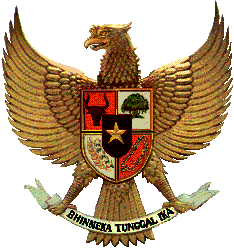
Pancasila is the philosophic fundamentals of the state. The word “Pancasila” is derived from two Sanskrit words, “panca” which means five, and “sila” which means principle. Pancasila consists of five principles that are interrelated and inseparable, namely:
1. Ketuhanan Yang Maha Esa (The belief in one God)
2. Kemanusiaan Yang Adil Dan Beradab (A just and civilized humanism)
3. Persatuan Indonesia (Unity of Indonesia)
4. Kerakyatan Yang Dipimpin Oleh Hikmat Kebijaksanaan Dalam Permusyawaratan/Perwakilan (Democratic citizenship lead by wise guidance born of representative consultation)
5. Keadilan Sosial Bagi Seluruh Rakyat Indonesia (Social just for all the people of Indonesia)
Indonesia is a democratic country that applies a presidential system and Pancasila is the soul of the Indonesian democracy. Indonesia adopts a democracy that is based on the 5 principles known as the Pancasila Democracy. These state fundamentals were proclaimed by President Soekarno (the first President of Indonesia) on the Declaration of Independence of the Republic of Indonesia on 17 August 1945.
GEOGRAPHICAL POSITION
Indonesia is one of the largest archipelagos in the world that has 17,508 islands, situated between 6 degrees northern latitude and 11 degrees southern latitude and spreading from 97 degrees to 141 degrees eastern longitude and it is located between two continents – Asia and Australia/Oceania. This strategic position greatly influences the country’s culture, social, politics and economy.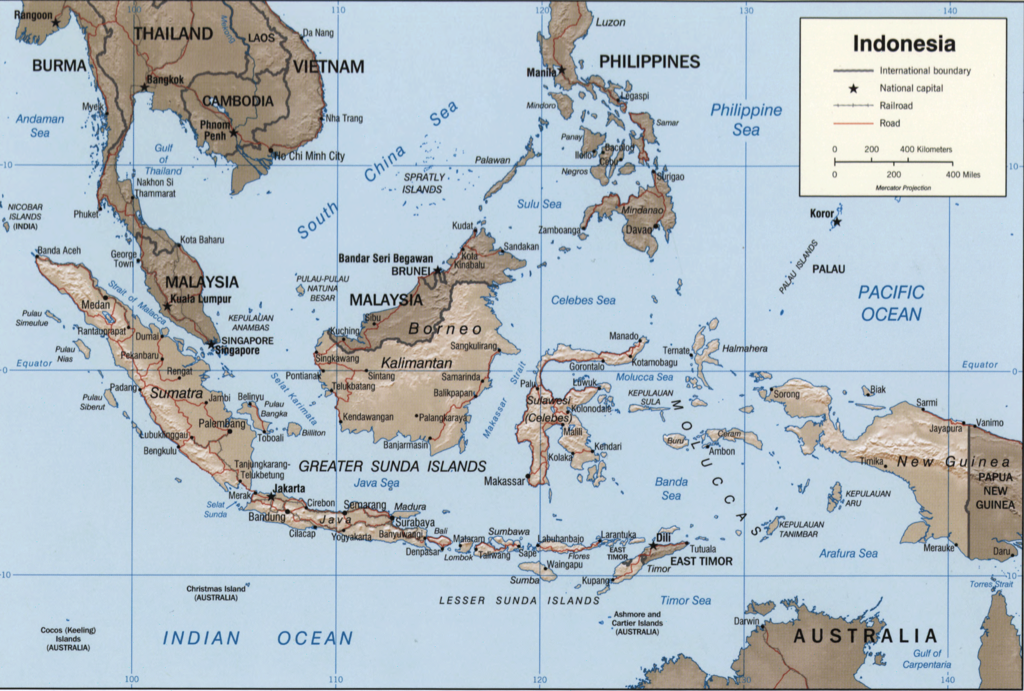
Stretching along 3,977 miles between the Indian Ocean and the Pacific Ocean, Indonesia has a total area of 1.9 million square miles including the ocean waters.
The five large islands of Indonesia are: Sumatera covering 473.606 square km, Java with 132.107 square km, Kalimantan (the third largest island in the world) with an area of 539.460 square km, Sulawesi with 189.216 square km, and Papua with an area of 421.981 square km.
GEOLOGICAL HISTORY
The islands of Indonesia were formed in the Miocene age (12 million years BC); Palaeocene age (70 million years BC); Eocene age (30 million years BC); Oligacene age (25 million years BC). As people from Asia started to migrate, it is believed that Indonesia existed since the Pleistocene age (4 million years BC). The islands have a great effect on the change of the Australian and Pacific tectonic plate. The Australian plate changes slowly with an upward movement into the small plates of the Pacific plate that moves southward. Between these lines, the islands of Indonesia are stretched out.
This makes Indonesia as one of the most changing geological area in the world. There are 400 volcanic mountains – which 100 of them are active- that dot the islands of Indonesia. Every day Indonesia experiences three vibrations, at least one earthquake a day and one volcanic eruption in a year.
DEMOGRAPHY
The population of Indonesia can be divided into two major groups: in the western region most of the people are from the Malay ethnicity while in the eastern region there are the Papuans originating from the Melanesian Islands. Indonesia also recognizes specific ethnic groups that come from a certain province/area and have specific language for example the Javanese from Central or East Java, the Sundanese from West Java or the Batak ethnicity from North Sumatra.
In addition, there are also minority ethnicities derived from Chinese, Indian and Arabic descendents. These people travelled as merchants through trade exchange since the 8th century BC and migrated to Indonesia. Approximately 3% of the population is from Chinese ethnicity, although the exact percentage is not known as the last ethnicity census was held in the 1930s.
Islam is the major religion of 85.2% of the population, designating Indonesia as the largest Moslem country in the world. The remaining population consists of Protestants (8.9%); Catholics (3%); Hindus (1.8%); Buddhists (0.8%) and other religion (0.3%).
Many Indonesians speak their ethnic language as their mother tongue. However, the Indonesian language is the official language and it is taught at all schools and most Indonesians are proficient in using the language for communication.
POLITICS
As in other democratic countries, Indonesia applies the Trias Politica that recognizes the separation of the legislative, executive and judicial bodies. The legislative authority is under the People’s Consultative Assembly (MPR) that consists of two bodies namely the Parliament composing of members of political parties and the Regional Representative Council (DPD) composing of representatives from each province in Indonesia. Each province is represented by 4 delegates that are elected by the people in the respective region.
The People’s Consultative Assembly (MPR) is the highest state institution. Upon the Amendment of the 1945 Constitution, the membership of the MPR starting the period of 1999-2004, was amended to include not only the members of the parliament (DPR) but also the members of the DPD. Formerly the MPR consisted of the parliament members and group representatives. Currently, the MPR has 550 members from the parliament and 128 members from the Regional Representative Council (DPD). The parliament members and the DPD members are elected every five years. Since 2004, the MPR has become a bi-chamber parliament with the DPD as second chamber.
The executive institution is centralized under the president, vice president, and the cabinet of ministers. The cabinet is a presidential cabinet in which the ministers report to the president and do not represent the political parties.
The judicial institution -since the reform era and upon the amendment of the 1945 Constitution- is administered by the Supreme Court including the administration of the judges.
PROVINCES
Indonesia has 33 provinces (including 2 Special Territories of Nanggroe Aceh Darussalam and Yogyakarta) and one Special Capital Region of Jakarta (DKI). East Timor was once part of Indonesia, but then through a referendum in 1999, East Timor became the Democratic Republic of Timor Leste.
Provinces in Indonesia
Sumatra
Nanggroe Aceh Darussalam, North Sumatera, West Sumatera, Bengkulu, Riau, Riau Islands, Jambi, South Sumatera, Lampung, Bangka Belitung Islands.
Java
Jakarta, West Java, Banten, Central Java, Yogyakarta Special Territory, East Java.
Kalimantan
West Kalimantan, Central Kalimantan, South Kalimantan, East Kalimantan.
Nusa Tenggara
Bali, West Nusa Tenggara, East Nusa Tenggara.
Sulawesi
West Sulawesi, North Sulawesi, Central Sulawesi, South Sulawesi, South East Sulawesi, Gorontalo.
Maluku and Papua Islands
Maluku, North Maluku, West Papua, Papua.
ECONOMY
In the 1990’s, Indonesia’s economy experienced a set-back as a consequence of the economy crisis that hit most Asian countries. However, the economy is now relatively stable.
Indonesia has abundant natural resources outside Java including crude oil, natural gas, tin, copper and gold. Despite being the second largest exporter of natural gas, Indonesia recently has become a net importer of crude oil. The agriculture products of Indonesia include rice, tea, coffee, spices and rubber.
The major trade partners of Indonesia are Japan, the United States of America and neighboring countries namely Malaysia, Singapore and Australia.
Although Indonesia is rich in natural and human resources, the country is still facing crucial issues of poverty that mainly is caused by the wide-spread corruption in the government. The Central Bank is Bank Indonesia.
CULTURAL ART
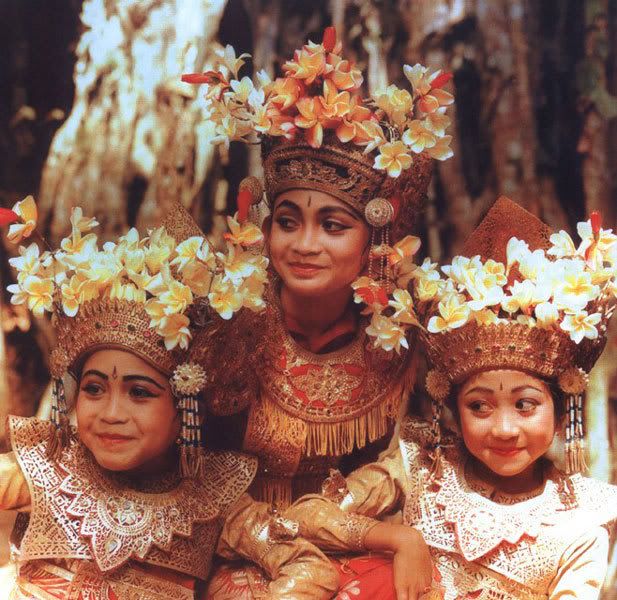 Indonesia’s cultural art is greatly influenced by other cultures, such as the Hindu mythology and culture that is reflected in the Javanese and Balinese dances.
Many of the dances also reflect some Islamic values. Several of these dances originate from the island of Sumatra, such as the Saman Meusukat dance and the Seudati dance from Nanggroe Aceh Darussalam.
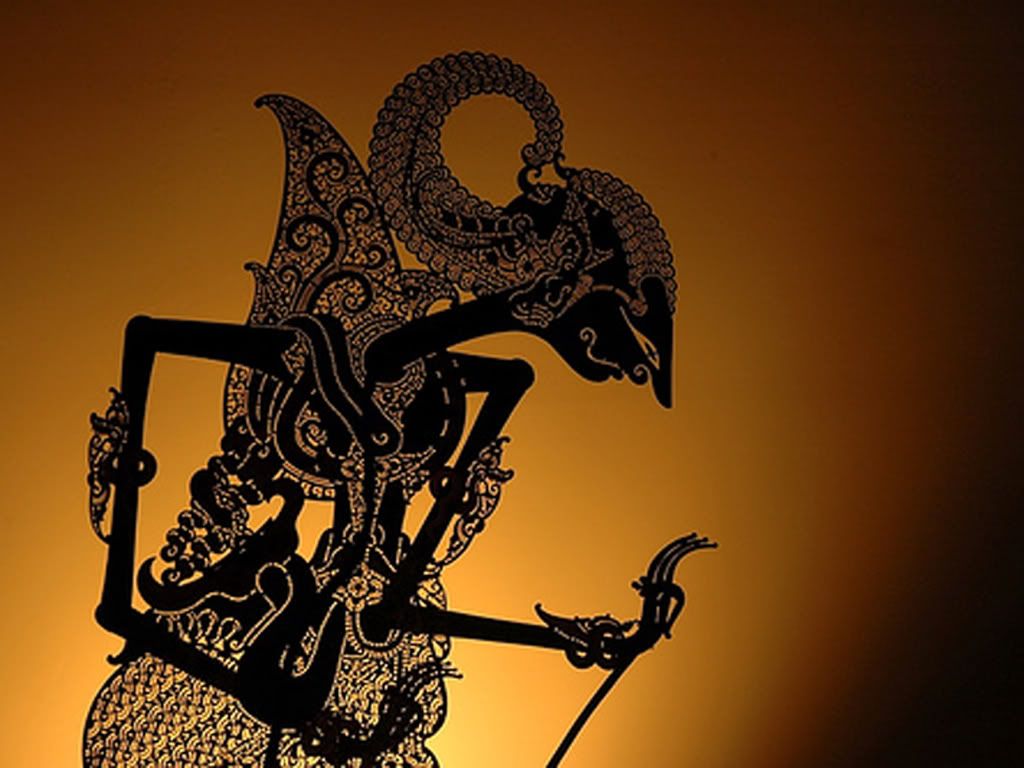
Another famous cultural item from Indonesia is the wayang kulit (shadow puppet made from goat skin) that depicts mythological characters and stories. The art of old poetry in the form of quatrain and couplet sayings from various regions such as the Malay quatrain are often cited in special occasions or in cultural performances.
One of Indonesia’s cultural heritage that has been acknowledged as a world heritage is the batik cloth. The prominent batik industry areas are in Yogyakarta, Solo, and also Pekalongan.
Pencak silat is an art of self defense which is uniquely from Indonesia. This martial art is sometimes shown at certain performances accompanied by traditional music of the region.
In the field of music, Indonesia is rich with traditional as well as modern music that extends from the city of Sabang (the western point of Indonesia) to the city of Merauke (the eastern point of Indonesia). Although traditional music including Javanese keroncong is commonly known, modern music is more popular followed by dangdut music. Dangdut is one type of music originating from Indonesia that has also become quite popular throughout the country. This type of music is a blend of Malay and Indian music with elements from traditional music as well. The name of “Dangdut “ is derived from the sounds of “dang” and “dut” (pronounced as “doot”) that come from the dominating resonances of the bongo and the flute. The Dangdut singers usually sing while dancing expressively and gracefully following the beat of the music. There are several varieties of Dangdut music namely Malay Dangdut, Modern Dangdut (using modern instruments) and Coastal Dangdut (influenced by Javanese and Sundanese traditional music). In the 1970s, Dangdut was initially recognized as a type of Malay orchestral music, but in the 1980s, this type of music became more popularly known as Dangdut music.
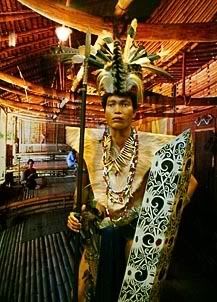
The people of Indonesia consist of various ethnic groups, religions and faith. The various ethnic groups are for example Dayak in Kalimantan (Borneo), Batak, Karo, Minangkabau, Malay in Sumatra and so forth. Indonesia acknowledges several religions namely Islam, Christianity, Catholicism, Hinduism and Buddhism and the Konghucu faith, but the majority of the population are Moslems.
Sources: Indonesian Government Official Website
www.indonesia.go.id
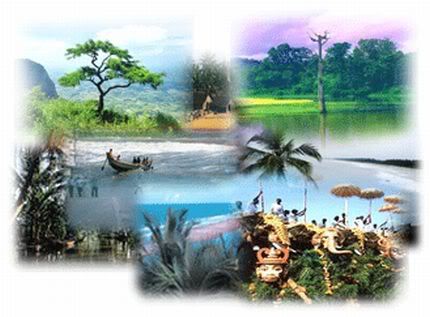 Indonesian tourism sector is not affected significantly after bombing incidents in the Hotel Ritz Carlton and JW Marriott Mega Kuningan, South Jakarta, last week. Thus revealed at the press meet that was attended by representatives of all elements of tourism such as airlines, hospitality, and food services at the Media Center, Bellagio Mall, South Jakarta.