Alta Petroglyphs: Prehistoric Rock Carvings - World Heritage Site
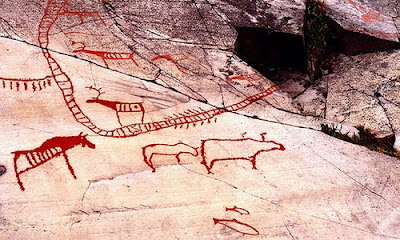 Petroglyph Alta is located at the northern tip of Norway near the Arctic Circle. Alta rock carvings is a collection of Petroglyph (rock art) that included to the most important prehistoric site from 4200-500 BC. This is one destination that you should go on holiday to Norway.
First discovered in 1967, 5000 rock carving site was designated a World Heritage Site in 1985. According to UNESCO, Petroglyph Alta is the most important part of the evidence supporting the existence of human activities in the north of the prehistoric period.
Rock art at Alta recorded around 4200-500 BC, has four main phases of work. Carvings and paintings on stones along the fjord from the Ice Age, works of art found at the height of the rocks are the oldest, while the Petroglyph near the sea surface is the latest.
Modern history of the Alta carvings started in 1967, when first discovered and studied. The artwork is then designated as a World Heritage Site in 1985. Following several years later by the opening of Alta Museum in June 1991.
Petroglyph in Alta has more than 5,000 paintings and engravings that are found in over 45 sites. The main site, which is now a museum contains about 3000 petroglyph Alta. Although this painting has been painted over by the investigators, but otherwise completely original.
The main site of Petroglyph is part of an open museum that also includes a very good indoor exhibition, including prehistoric rock art and the general history of the area. From the Alta museum, you can follow the marked path that leads to a sloping hill toward the fjord. Along the road you will find a 13 point stops to see rock art.
Petroglyph itself described the various forms of geometric symbols and animals such as bears and deer. There are also depictions of human activities such as hunting, fishing, navigation, and ritual. While agricultural activities with pets in the fence, appearing among the latest Petroglyph (near 500 BC).
When you decide to visit, the Alta museum is open daily. Starting from October to April open 9:00 to 16:00 o'clock local time, while May and September from 9:00 to 18:00 o'clock local time. Meanwhile, in June-August starting at 8:00 to 21:00 local time.
Charges will apply when visiting these sites during October-April for adults at 45 krona (about $7), while during May-September for adults 85 krona (about $13).

